Last Updated on January 23, 2026 by Karis Tavernier-Nicholas
You might have heard of it while reading about Mr Bingley’s arrival in Jane Austen’s Pride and Prejudice or noticed how some universities in the UK commonly refer to it as the first term of an academic year. Or maybe you first heard about it while watching the latest series of Mayfair Witches. But what actually is Michaelmas?
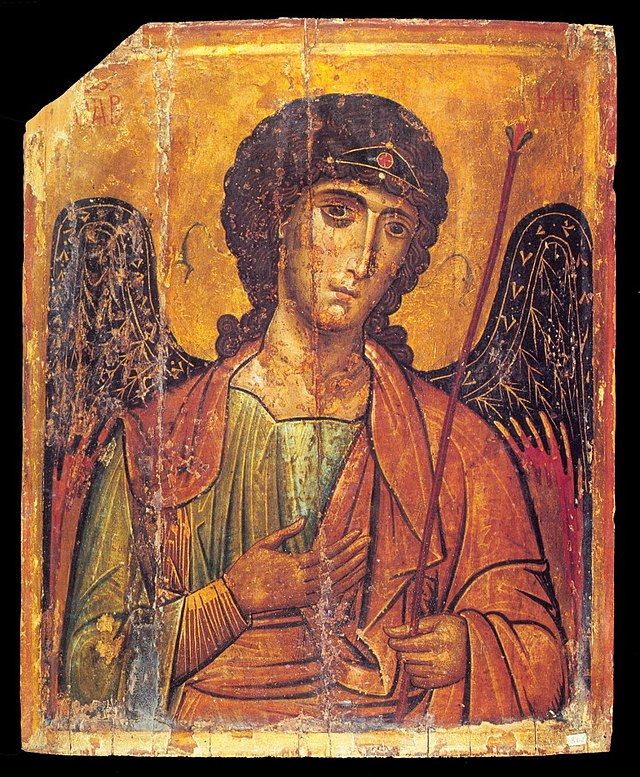
As the name suggests, Michaelmas is a celebration of St Michael (also known as Archangel Michael), one of the three archangels of the Christian Bible, along with Archangel Gabriel and Archangel Raphael (according to the Roman Catholic Church’s tradition). It occurs annually on 29th September, and while the festival is probably not as widely celebrated as it once was, echoes of this tradition still linger. Here’s more on the history of Michaelmas in Britain and how it’s marked today.
The History of Michaelmas
Pronounced “Mick-ul-mas” or “Mike-al-mas” depending on your location, Michaelmas, also known as the Feast of St Michael and All Angels, is a Christian festival which has been marked for centuries. It particularly celebrates the Archangel Michael, leader of the heavenly armies and the angel to defeat Lucifer and his fallen angels during the war in Heaven, and is overall a significant Biblical figure.
Just as Christmas is a shortened version of ‘Christ’s Mass’, Michaelmas is derived from ‘Michael’s Mass’. Its proximity to the equinox means that Michaelmas is strongly associated with autumn. This also coincides with an old belief that the devil prevailed in the dark days of winter while St Michael protects against the darkness. It is part of the days that mark the four seasons of the year, those being: Lady Day – 25th March, Midsummer – 24th June, Michaelmas – 29th September and Christmas – 25th December.
While Michaelmas can hardly be described as a major event in a similar way that Christmas and Easter are, it remains embedded in British culture. Following King Henry VIII’s break from the Catholic Church in 1554, the harvest period became simply known as the Harvest Festival, although it is still commonly referred to as Michaelmas. From the first term of the academic year being referred to as Michaelmas for some British universities (in Scotland, it’s ‘Martinmas’ which celebrates St Martin of Tours), to Waldorf schools marking this day with a Michaelmas play and walk, to the election of a new Lord Mayor in the City of London, its legacy can still be seen in many areas of life.
How Michaelmas is Celebrated
Historically, the harvest would be completed by Michaelmas, marking the end of the productive season and the start of a new cycle of farming. In Britain, it was tradition to eat a fattened goose which had been fed from the harvested fields as it was thought to bring prosperity for the following year. But… why a goose?
Well, this idea possibly comes from the story that Elizabeth I was enjoying a goose when news reached her that the Spanish Armada had been defeated. As such, she declared she would have goose every Michaelmas since it was clearly a sign of good luck. However, the defeat of the Spanish Armada occurred in August, not September, of 1588 and the association of geese with Michaelmas had been established at least a century earlier, so this story seems unlikely.
Around the time of Michaelmas, rents and other debts would also be due. For those who couldn’t afford to make the necessary payments, a goose would sometimes be offered in lieu of money, with the hope that all the good luck it brought with it would be tempting enough for those coming to claim debts.
In addition to geese, blackberries would also be enjoyed. This came from the folkloric tale that when St Michael cast the devil out of Heaven, the latter landed on a blackberry patch, a place he returns every year to curse and spit on. And so from Michaelmas day onwards blackberries wouldn’t be eaten – indeed, they’re only in season between May to September.
Ways You Can Mark Michaelmas Day
If getting hold of a goose is too difficult (or if it’s just not in your dietary tastes), baking a blackberry pie is probably a simple (and delicious!) option. As well as this, adding a bouquet of Michaelmas daisies (also known as Asters) into your home – flowering between August and October – is an easy and clear way of marking this centuries-old festival.